

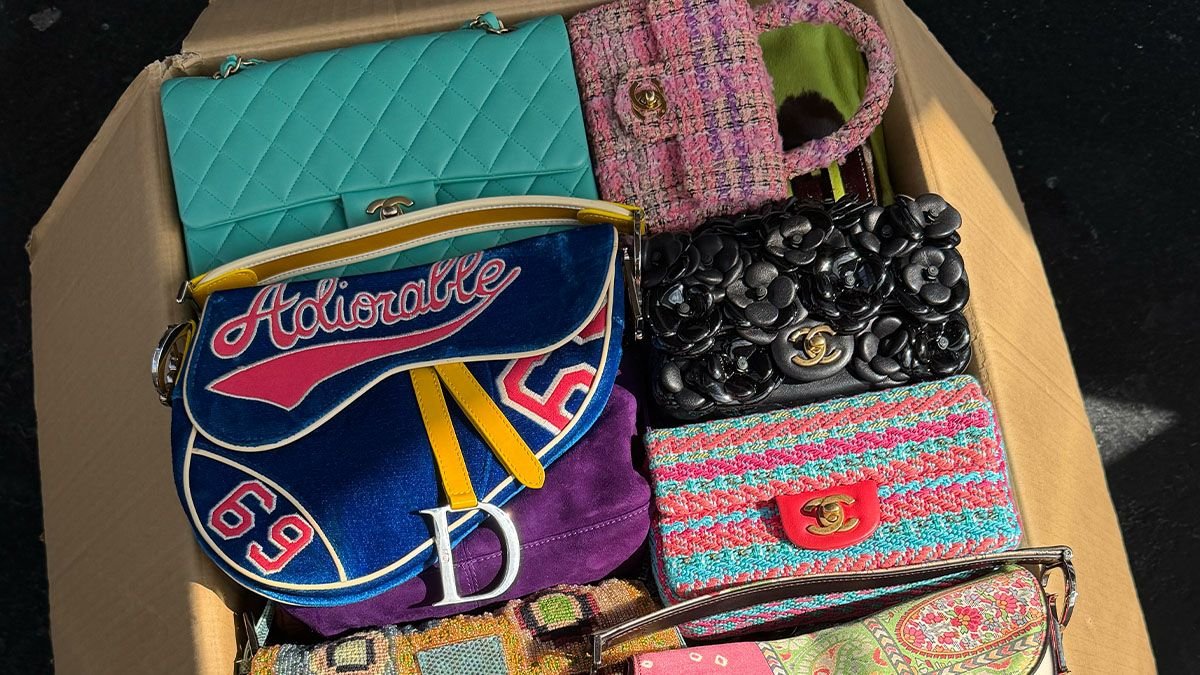
It’s a strange time to run a vintage fashion business. On the surface, everything seems rosy: secondhand sales are booming, consumers are more accepting of pre-loved, and the sector is even claiming space in the fashion show circuit. But exposure brings competition, making it harder than ever for vintage stores to build a loyal customer base and sustain sales. At the same time, waste is still piling up and resale’s environmental footprint is rising.
The industry is changing rapidly, and resale’s playbook of yore needs a refresh. To understand what it takes to succeed today, Vogue Business invited four pre-loved businesses to share their secret sauce.
First is Cavalli e Nastri, the longstanding Milan-based boutique founded by vintage fashion trailblazer Claudia Jesi in 1980 and one of Europe’s best-known vintage boutiques. Then, there’s Break Archive, the relatively new kid on the block, founded by Gabriel Rylka in 2021, at the tender age of 18, now a go-to for luxury handbag lovers from London to Abu Dhabi. Next up is Berriez, a New York-based vintage store catering to plus-size women, one of the industry’s most overlooked consumer groups. And finally, heavy-hitter Vintage Qoo, a stalwart of the Tokyo vintage scene that benefits from the city’s pre-loved fashion tourism.
The Vintage Qoo flagship in Omotesando includes a basement dedicated to preloved Chanel.Photo: Vintage Qoo Tokyo
From ultra-selective curation to diverse sourcing networks and high-stakes security investments, this is how to run a successful vintage fashion business today.
Curation is king
When Vintage Qoo was founded in 2012, Japan already had a thriving vintage fashion scene, but it has exploded post-pandemic, bringing new customers and competition. “It has become more important than ever to clearly define what makes us unique and to keep giving customers a compelling reason to choose and visit Vintage Qoo,” says Sakimi Hamada, president and CEO of Vintage Qoo owner Eight Inc. To do so, the company focuses on curation, while educating consumers on why pieces were selected and specializing its stores around specific time periods and brands.
The flagship Vintage Qoo store in Omotesando combines an “unrivaled breadth” of pre-loved luxury on the ground floor with a basement dedicated to vintage Chanel, while the Osaka Shinsaibashi store focuses solely on Chanel. Two of its sister boutiques — Orange Boutique Aoyama and Orange Boutique Shibuya — specialize in rare, pre-owned Hermès pieces, and another — Tokyo Brand Produced by Alamode Shibuya 109 — is known for pre-owned luxury watches. “Rather than simply selling products, we highlight the stories behind each piece and create a distinctive in-store experience and brand universe,” says Hamada. “Each store must have a clear character.”
