

Wearstler noted that she had long followed H&M’s partnerships with fashion designers—she was a particular fan of their Margiela collaboration back in 2012—and so, when the Swedish retail giant came knocking, it was a quick yes. She quickly learned the project would come with a few constraints, like sizing—if anything, that was all the more liberating.
“We have limitations in all of our projects,” she reflected, “but it was great, and it really pushed us to be more creative. It makes you a better designer.”
It’s partly this that led to the modular nature of many of the pieces in the collection—those chairs that were assembled in the palazzo’s courtyard, say, or the bouclé chairs stacked in its historic rooms—and that also helped solidify the core philosophy of the collection: in Wearstler’s words, that these pieces should “be able to reinvent and adapt to your lifestyle.” Other key tenets of that philosophy include thinking about ritual—“reexamining the things you grab every day and you often don’t even think about,” she says—and using mixed materials to lend the pieces “a soul.” Those materials are also, in many cases, surprisingly premium: natural marble, poplar and pine woods, fused glass, wool-cashmere blend throws. “It’s affordable, but the quality is still there,” Wearstler confirms. “It’s still great design.”
Photo: Sean Thomas
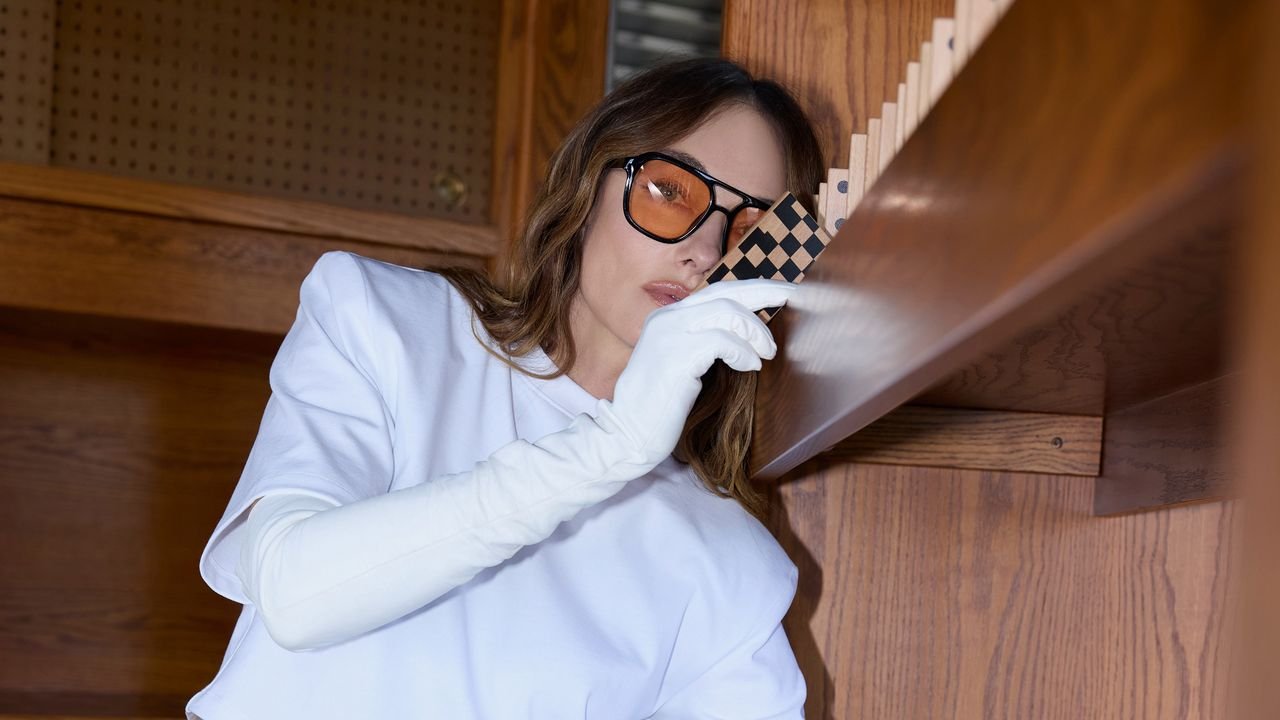
The most surprising element of all, perhaps? The capsule fashion collection that’s debuting alongside it, which came about halfway through the project when Wearstler decided she wanted to make the world she’s creating for H&M as 360-degree as possible.
“I said, ‘Would you guys be open to doing that?’” Wearstler recalls. “Fashion is such a big inspiration for me. Even when we do the hotels, we love to design the uniforms, because it’s a whole lifestyle. How can you leave out fashion? It’s all part of the storytelling.” (There’s that word “storytelling,” again.)
