

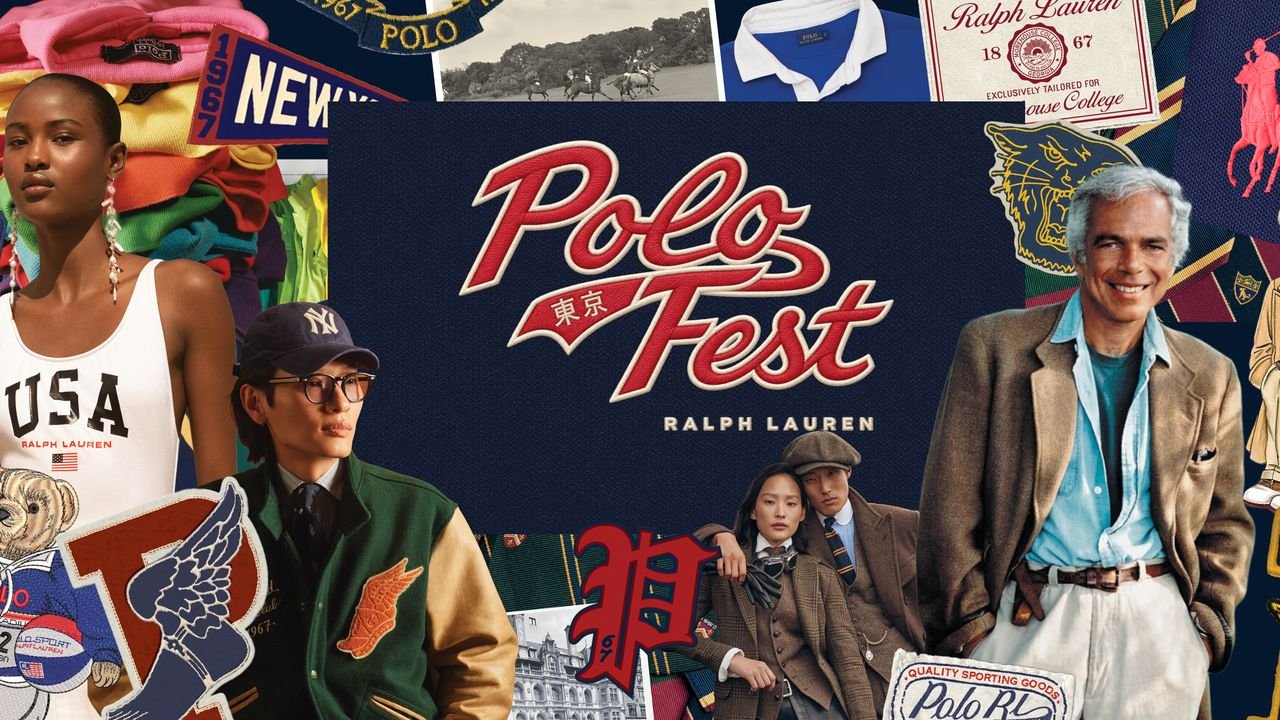
Polo was the name Lauren put on the label of his first collection of ties back in 1967. A year later he expanded into menswear proper, retaining the name, even though, as he later recalled, he had never at that point attended a polo match. At the time he reputedly observed: “I’m selling a feeling.” By 1970 Polo had expanded into sportswear and accessories, but it was the introduction of the Polo shirt in 1972 that gave the name its most enduring and accessible expression. As the Ralph Lauren universe subsequently expanded into lines including Purple Label and Double RL, Polo evolved into Lauren’s broadest proposition: the label through which his world of prep, sport, Americana and aspiration could reach the widest audience.
Polo Ralph Lauren, spring 2019 menswear
Polo Ralph Lauren, spring 2024 ready-to-wear
Photo: Courtesy of Polo Ralph Lauren
That audience proved especially receptive in Japan. Ralph Lauren dates its relationship with the country to 1976. Back in 2012, the company launched RL Vintage, an online project devoted to sourcing and reselling archival Ralph Lauren pieces. In the process, it discovered just how deeply a collecting culture had already developed around the brand there. At the time David Lauren described “a cult of Ralph Lauren” in Japan as “kind of amazing.” Tokyo had become home to a network of specialist dealers and collectors so committed to Lauren’s vision of America that anyone hunting for the perfect old suede field jacket might be better off bypassing Brooklyn and heading straight to the Japanese capital.
Polo Ralph Lauren, spring 2019 ready-to-wear
Photo: Matteo Montanari / Courtesy of Polo Ralph Lauren
Polo Ralph Lauren, fall 2025 ready-to-wear
Photo: Courtesy of Polo Ralph Lauren
