

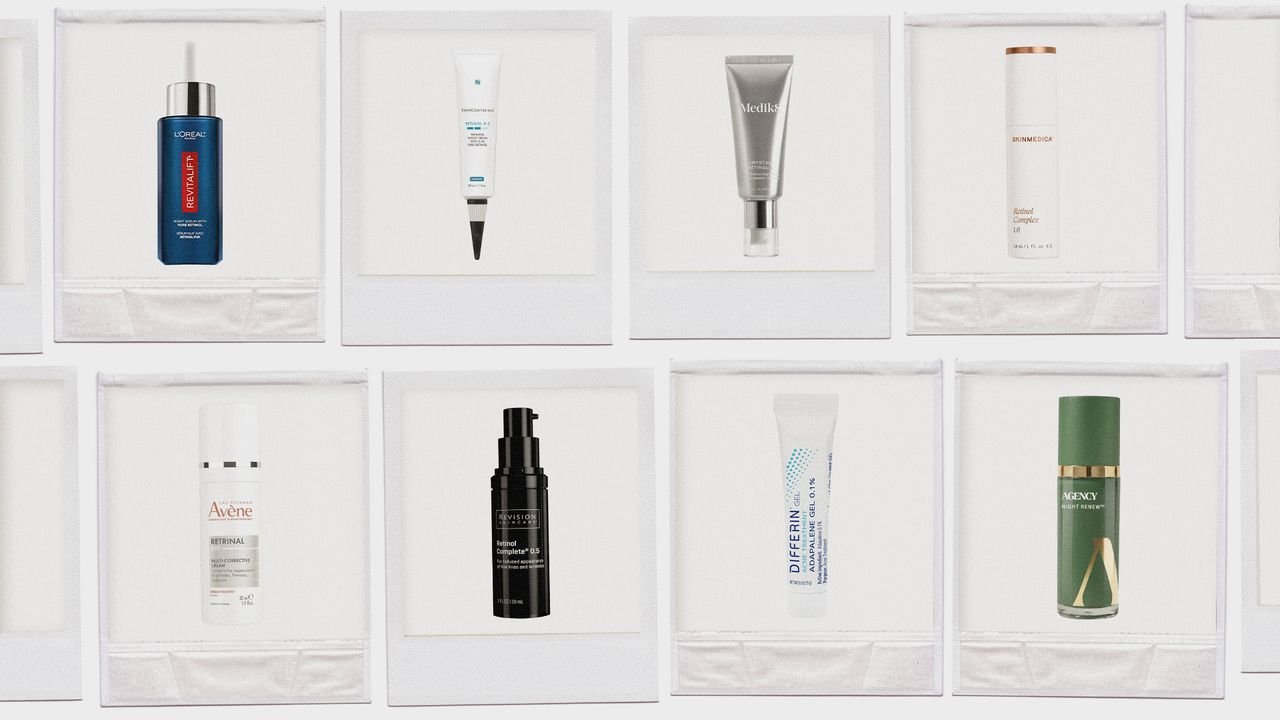
But for the most part, you aren’t applying retinol on its own in a formulation—or even in your routine. So while it may be tempting to jump to the strongest retinoid out there, “things like the formulation, concentration, and how well your skin tolerates it also make a difference,” Dr. Shirazi says. Moreover, a stronger formula doesn’t necessarily make it a better one, especially if it causes painful side effects like stinging and peeling, which are fairly common with retinoids. Rather, “a retinoid that you can comfortably use consistently will usually serve you better than one that leaves your skin irritated and forces you to stop,” she explains.
Before you choose your retinoid, consider what exactly you need. “I usually start by asking my patients three questions: What are we treating? How sensitive is your skin? And what is your experience with retinoids?” says Dr. Shirazi. If you have acne, you may benefit more from adapalene than someone who’s concerned about fine lines. And, for those who are new to retinoids or have sensitive skin (or both), an over-the-counter retinol can help you build tolerance without sacrificing your comfort.
At the end of the day, “you don’t necessarily need the strongest retinoid,” she says. “You need the one that’s going to give you results without making your skin miserable.” With that, scroll ahead for the types of retinoids for every concern.
