

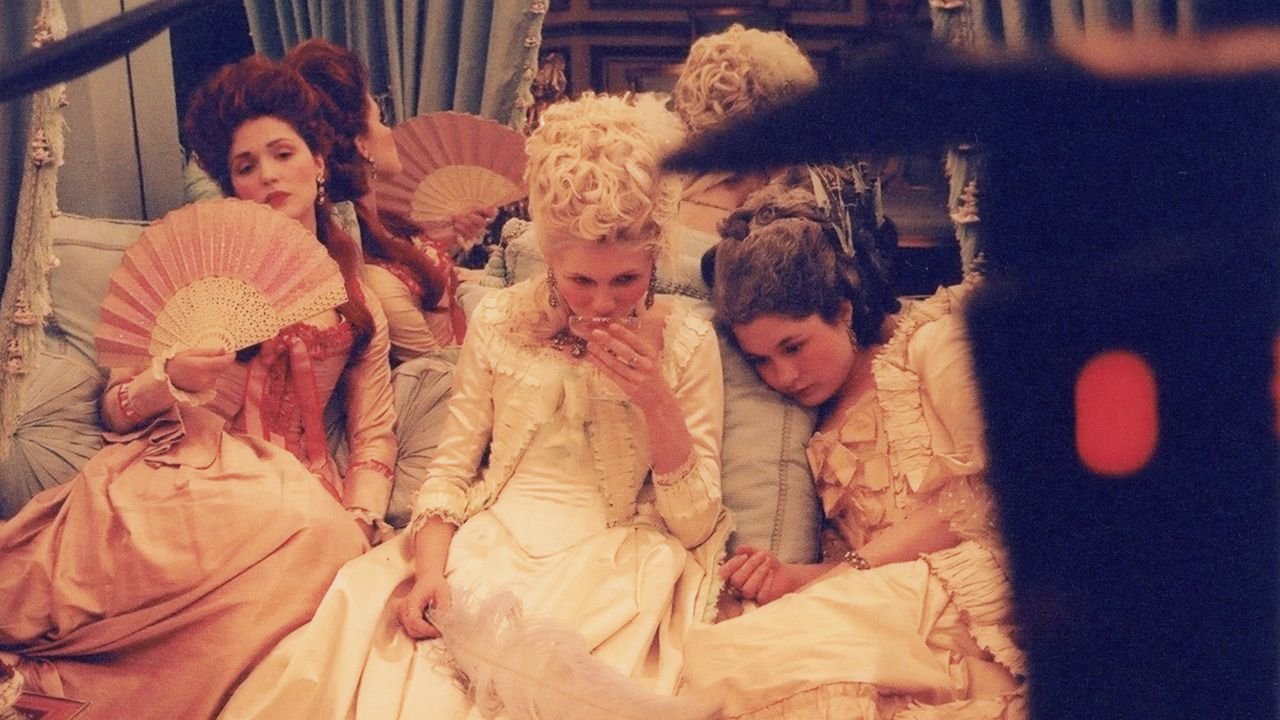
Unlike Hearts of Darkness, this is not a dramatic tale of slowly descending madness and narrowly averting disaster—it’s a quieter portrait of a master at work, but just as valuable and perhaps even more poignant for its centering and celebration of the female gaze. In its dissection of the minutiae of filming, from logistical challenges to the numerous costume changes and the intricacies of set decoration and choreography, it’s clearly designed for obsessive fans of Marie Antoinette—if you’re in any way alienated by the froth and fripperies, this won’t convert you. But for those who have watched and rewatched and pored over every single frame of this extraordinary period piece over the past two decades, it’s a one-of-a-kind treasure; an intimate and fascinating look at a revolutionary film which turned an entire genre on its head, and shaped everything that came next, from Bridgerton and The Great, to The Favourite and Wuthering Heights.
Making Marie Antoinette begins by laying out its backstory: during the production of Marie Antoinette in 2005, Eleanor Coppola was on set and captured more than 80 hours of candid footage. Some 15 years later, during the early days of the pandemic, Eleanor and Sofia found themselves in the same COVID bubble and revisited the recordings. Eleanor began stitching it together and, after her death in 2024, at the age of 87, Sofia ensured it was finished. The result is a very much authorized, but still illuminating glimpse at Marie Antoinette’s genesis over its 57 days of filming, from a shy, softly-spoken, then-34-year-old Sofia kicking off proceedings with the crew to a somewhat frenzied race to the finish line while staying on schedule and within budget.
Marie Antoinette devotees who have already scoured the internet for backstage images and anecdotes won’t find much here that’s genuinely revelatory, but it’s an immense joy simply to be in this world—to spot the Uggs peeking out from under extravagant ballgowns; to catch extras in powdered wigs snoozing between takes once shooting days stretched to 11 hours in the final portion of production; and to watch an off-duty Jason Schwartzman, in costume as Louis XVI, going ham on the piano while department heads around him attempt to have serious conversations about the film.
A handful of moments feel like gold dust: in one, Sofia introduces her mother, who is behind the camera, to her then new boyfriend (and now husband), Phoenix frontman Thomas Mars, as he and his bandmates arrive on set to make cameos as a coterie of court musicians at the Petit Trianon. In another, Asia Argento, in the gaudy finery of Madame du Barry, reads the palms of her co-stars during a break in filming. When Sofia asks Asia to read hers, she tells the director that she will have two children. (Romy and Cosima Mars would go on to be born in 2006 and 2010, respectively.)
