

Frequently asked questions
Is sunscreen with tint better?
The most important thing is to wear sunscreen—any sunscreen: The dermatologists we spoke with said that any broad-spectrum SPF is better than no SPF—whether it’s tinted or not. But in addition to defending your skin against fine lines and wrinkles, dark spots, discoloration, and skin cancer caused by UVA and UVB rays, tinted sunscreen goes a step further than your average formula. Tinted sunscreens typically have mineral SPF in them that can actually block sunlight, says New York City board-certified dermatologist Dendy Engelman, MD. That’s kind of a big deal, she explains, since visible light is “a key cause of hyperpigmentation, especially for those people who are more vulnerable to developing dark spots or melasma.”
Some of the best tinted sunscreens can even guard against blue light from computer and phone screens, which can also age your skin, says Arizona-based double board-certified pediatric and cosmetic dermatologist Karan Lal, DO. Dr. Lal recommends looking for iron oxide on the ingredient list to confirm your sunscreen can do this as well. Many tinted sunscreens use mineral blockers, so you’ve got a decent chance of finding one with zinc oxide, which will sit on the skin and refract harmful rays as if your skin is coated with tiny mirrors (as opposed to chemical sunscreens, which absorb UV rays first—which isn’t necessarily bad, but the mechanism can be more irritating to sensitive skin types).
Do dermatologists recommend tinted sunscreens?
Yes. The added layer of physical protection from the tint can be especially helpful for patients with hyperpigmentation or melasma, where light beyond UV can trigger darkening, Jenna Queller, MD, founder of DermWorks, explains.
How do I choose a tinted sunscreen for my face?
Tinted sunscreen can be tailored to skin type and concern, thanks to actives in the formula. Antioxidants, such as vitamin C, are great ingredients to have in your sunscreen because they provide additional protection against free-radical damage and photoaging, Dr. Engelman says. (Photoaging is the damage to the skin caused by the sun.) Peptides (an ingredient that plumps skin) are helpful, too, as they can help boost collagen. And the presence of hyaluronic acid, shea butter, or squalane is a great moisturizing bonus in tinted sunscreen.
On the flip side, there are certain ingredients people with sensitive skin should avoid. If you have sensitive skin or are prone to eczema, then steer clear of chemical sunscreen ingredients such as avobenzone, oxybenzone, homosalate, octinoxate, octocrylene, and octyl salicylate, which can be a common cause of allergic contact dermatitis, according to Dr. Lal.
Which is better, tinted sunscreen or BB cream?
Tinted sunscreens are not necessarily better than BB creams, but they do provide SPF coverage, which isn’t found in all BB creams. BB creams offer multiple benefits with a single application, so they’re a great way to streamline your skin care routine. “They’re also helpful for addressing certain skin concerns, including oiliness, redness, and acne, while evening out the complexion and leaving a natural-looking, perfected finish,” says Dr. Engelman. Tinted sunscreens, on the other hand, may contain similar ingredients and also provide sheer to medium coverage—but first and foremost, they offer UV protection, which gives them a leg up.
Is tinted sunscreen good for mature skin?
Tinted sunscreens are great for mature skin, according to Pooja Rambhia MD, a board-certified dermatologist based in New Jersey. “Mature skin carries decades of accumulated photodamage in the form of sunspots, uneven tone, and visible capillaries. A tinted sunscreen can help to blur the appearance of uneven skin tone, while the iron oxides help limit further pigment formation going forward,” she says. Heavier, more pigmented formulas can settle into fine lines, while a lighter, tinted layer diffuses light off the skin instead.
Can you use a tinted sunscreen everyday?
Absolutely, and Dr. Queller recommends it to her patients. “Tinted sunscreen can replace foundation or BB cream in your routine, making daily use easier and more consistent,” she says. Since consistency is one of the biggest predictors of good sun protection and long‑term skin health, these products that act as two-in-one (makeup and sunscreen) can help you get there.
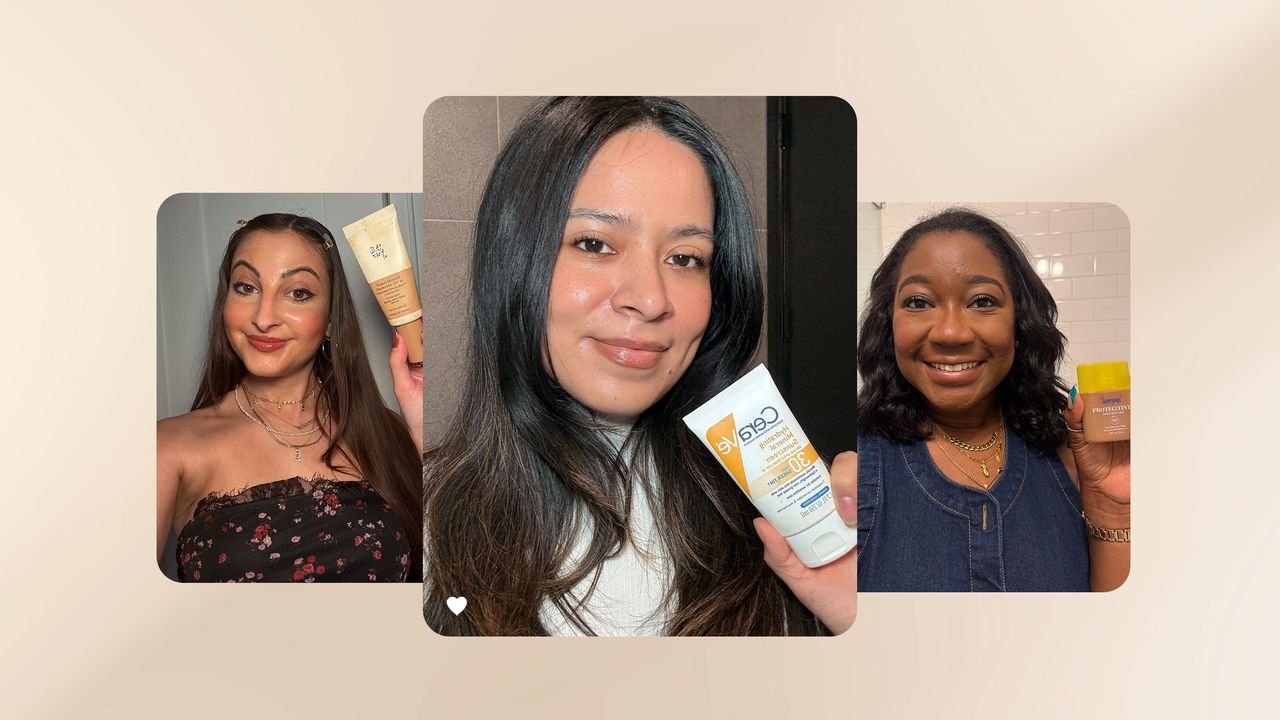
We tested tinted sunscreens with testers between the ages of 30 and 60 who not only want to protect their skin with sunscreen, but are also looking for coverage to help address and conceal discoloration and acne, and antiaging ingredients to firm and plump skin. We started by evaluating the products’ texture (lightweight and grease-free), longevity, pilling, and how long they protect from the sun. From then, we chose the best sunscreens suitable for all skin types, including sensitive and acne-prone skin, that didn’t leave residue. We also paid attention to those that offered lightweight coverage to help minimize the appearance of blemishes and pores, as well as mineral-based options with good-for-your-skin ingredients, including antioxidants such as vitamins C and E.
- Marisa Garshick, MD, board-certified dermatologist at MDCS Dermatology in NYC
- Deborah Longwill, DO, board-certified dermatologist and founder of the Miami Center for Dermatology
- Dendy Engelman, MD, board-certified dermatologist in NYC
- Jenna Queller, MD, and founder of DermWorks in Boca Raton, Florida
- Karan Lal, DO, double board-certified pediatric and cosmetic dermatologist in Arizona
- Pooja Rambhia MD, board-certified dermatologist based in New Jersey
