

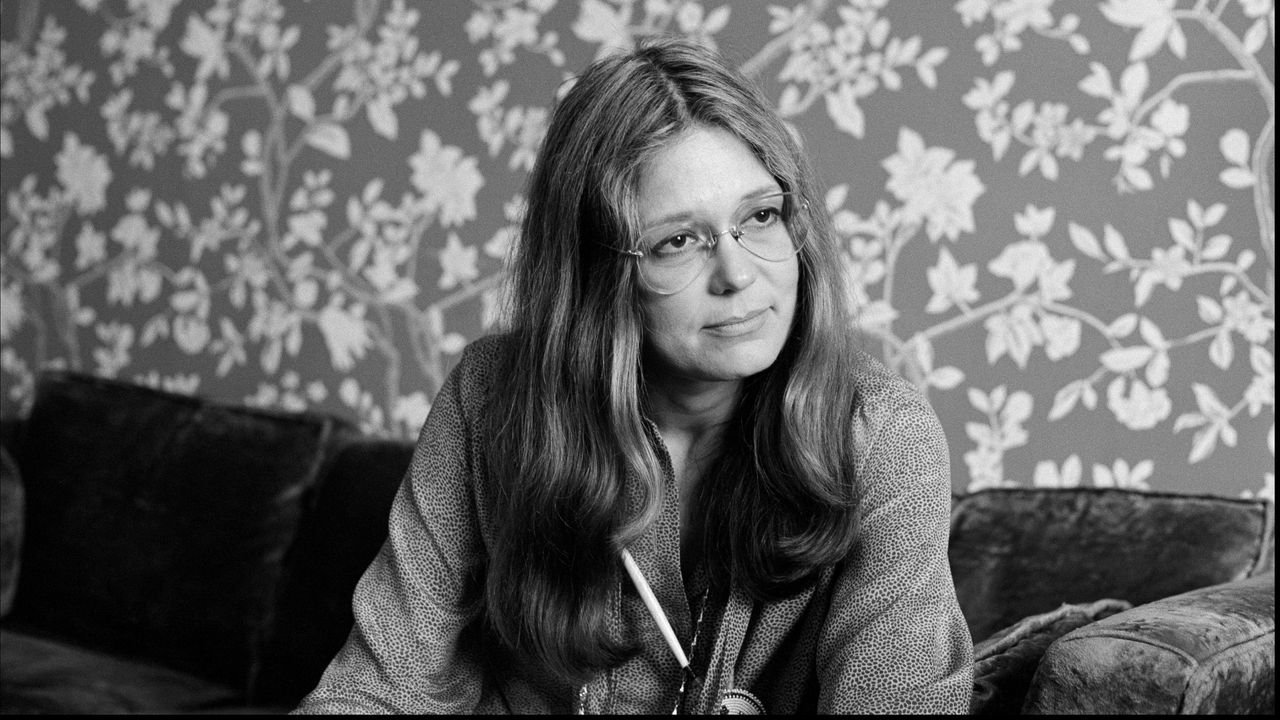
Yesterday, at the age of 92, Gloria Steinem died. Later this month, her new memoir, An Unexpected Life, will be published. In this exclusive—and now especially poignant—excerpt, she discusses the trajectory of her life and what she hoped to leave behind.
Though I’m past the age of average life expectancy, I don’t think about mortality much; just enough to make sure that the rooms and books I love will be well-used after I am gone.
I’m not sure there is an afterlife, at least one that is longer than the memories of those who love us. I didn’t grow up with a religious idea of heaven or hell. It seems motive enough to be fully alive in the present, and to leave positive memories behind.
I don’t have the regrets that are sometimes assumed. For instance, I’ve been asked if I regret not having children, especially since I grew up in the post-war 1950s when women were expected to make up for wartime losses. The answer is no, because I feel we are all related. I don’t mean to make this sound easy. Aside from happy love affairs that usually turn into friendships, there might seem from the outside to be too little family in my life. But actually, there is a loving and satisfying feeling in shared experiences and shared goals.
Of course, I do have regrets. For one, I spent way too much time doing what was expected of me, and not enough doing what I loved. I wish I had spent more time writing. Writing has always been the one thing that when I am doing it, there is nothing else I want to be doing. I still have many books in me.
Given my generation, I also grew up assuming that I would have to marry my identity, not become it. This scary idea caused me to put off marriage, and to live a temporary life. Not until my forties did I begin to see that a different kind of life was possible, one where I wasn’t bound to fulfill my husband’s dreams and depend on him financially. I learned that the work I loved could also create the future I wanted.
The lesson I’ve absorbed from my work is that we all learn from diversity, not from sameness. To be with people of different ages, races, and experiences is a gift.
The very young and the very old understand each other the best because we are the closest to the unknown
