

Frequently asked questions
Do you really need a night cream?
“We not only recommend night creams, we use them ourselves,” says Rachel Nazarian, MD, a board-certified dermatologist in New York City. She explains that nighttime is inherently a time of repair for our bodies and skin. “The hours that we’re asleep can be utilized to improve our skin health, and give skin the tools it needs to perform its best,” she says. There’s many different ingredients you can use at night, including retinol and hydrators like hyaluronic acid and ceramides. “These ingredients use various pathways to enhance our skin’s ability to preserve and repair itself and also strengthen the skin barrier to protect us from outside offenses,” she adds. The skin also loses a lot of hydration while we sleep, so this is a great time to use a thicker, heavier cream to retain moisture.
How to find the right night cream for your skin type
This comes down to your skin type and what you want from a product. “When looking for a night cream to prevent or treat wrinkles, it’s important to look for ingredients that stimulate collagen production and improve skin elasticity,” says Divya Shokeen, MD, a board-certified dermatologist and founder of California’s Ocean Skin and Vein Institute. “Retinoids, peptides, and antioxidants such as vitamins C and E are all effective ingredients for antiaging, while hydrating ingredients such as hyaluronic acid can also help to plump up the skin and reduce the appearance of fine lines.”
If your skin is oily or prone to breakouts, however, go for more lightweight options. “Look for a night cream that is water-based, since oil-based moisturizers may potentially clog pores and contribute to acne formation,” says Brendan Camp, MD, a board-certified dermatologist at New York’s MDCS Dermatology. “Noncomedogenic on the label implies that a product is less likely to cause acne.” Indeed, noncomedogenic essentially translates to “non-pore-clogging.”
Basically, the best night cream is chock-full of complexion-boosting ingredients such as retinol and retinoids, which are hard at work while you’re fast asleep. “Retinols are included in some night creams because of their ability to improve collagen production and minimize the appearance of fine lines, wrinkles, and dark spots,” says Dr. Camp. Other ingredients you’ll typically find in night cream? Moisture-boosting hyaluronic acid and exfoliating alpha-hydroxy acids (AHAs). Editor tip: Don’t stack AHAs with retinoids in the same routine unless you know your skin tolerates it.
When and how often should you use night cream?
Most people can use night creams every night, but dermatologists recommend using your cream only two to three nights a week if it includes AHAs and retinol; this will build up your skin’s tolerance. “Night creams can be used on a routine basis, or as needed when skin is dry and requires more intense hydration and moisture,” says Dr. Camp. That said, if you’re using a night cream for antiaging purposes, he says consistency is key to seeing improvement—so the more often you use it, the better.
If you use retinol, Dr. Mitchell recommends pairing it with a nourishing night cream to minimize dryness and irritation. “Using a night cream consistently matters more than using the strongest product available,” she says.
What night cream is best for aging skin?
“Mature skin requires ingredients that target wrinkles, loss of elasticity, and overall skin rejuvenation,” says Dr. Garshick. She recommends the following:
- Retinoid formulas that help stimulate collagen production, reduce wrinkles, and enhance skin texture;
- Peptides because they support skin structure by boosting collagen and elastin production, leading to firmer and more youthful skin;
- Hyaluronic acid because it plumps the skin and reduces the appearance of fine lines;
- Ceramides, which are essential for helping to lock in moisture and strengthen the skin barrier, ensuring that mature skin stays hydrated and healthy.
Use it as the final step of your evening skin care routine, says Dr. Mitchell. “After washing with a gentle face cleanser, apply any serums or treatments, then use a nickel- to quarter-size amount of night cream. Gently press it into the skin rather than rubbing. Be sure to include the neck and chest,” she says.
How we evaluated night creams
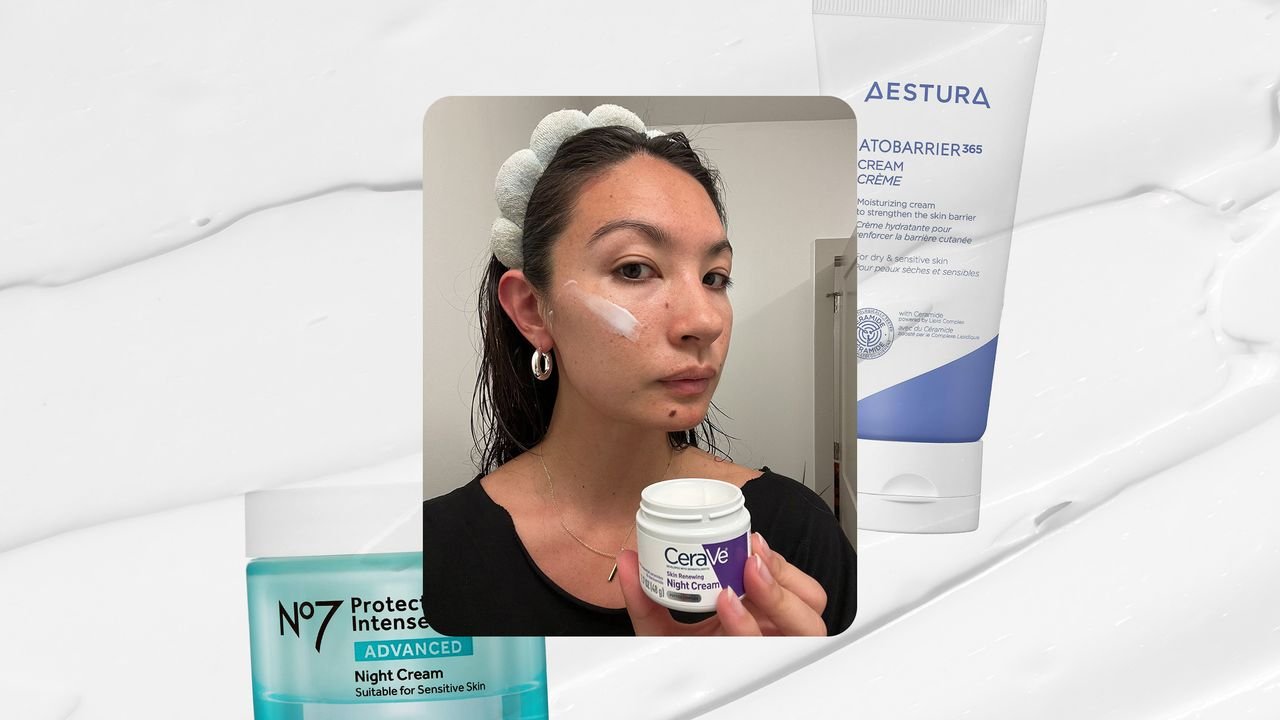
We started by choosing night creams with effective dermatologist-recommended formulas. We looked for ingredients that address signs of aging, including peptides and retinol, hydrators like hyaluronic acid, and antioxidants like vitamin C. Our five testers (ranging in age from 30 to 65) evaluated the texture and how their skin felt in the morning. We chose ones that were creamy and thick to the touch, but not overly greasy or messy—most sank right into our skin upon contact. The ones that made our list gave us glowing, plump skin by morning, and some of our testers with mature skin noticed that these night creams minimized fine lines and wrinkles over time.
- Brendan Camp, MD, board-certified dermatologist at New York’s MDCS Dermatology
- Christina Chung, MD, board-certified dermatologist at Schweiger Dermatology in Pennsylvania
- Marisa Garshick, MD, board-certified dermatologist at New York’s MDCS Dermatology
- Kiran Mian, MD, board-certified dermatologist at Hudson Dermatology and Laser Surgery
- Hope Mitchell, MD, board-certified dermatologist based in Ohio and founder of Mitchell Dermatology
- Divya Shokeen, MD, board-certified dermatologist at and founder of California’s Ocean Skin and Vein Institute
- Rachel Nazarian, MD, a board-certified dermatologist in New York City
