

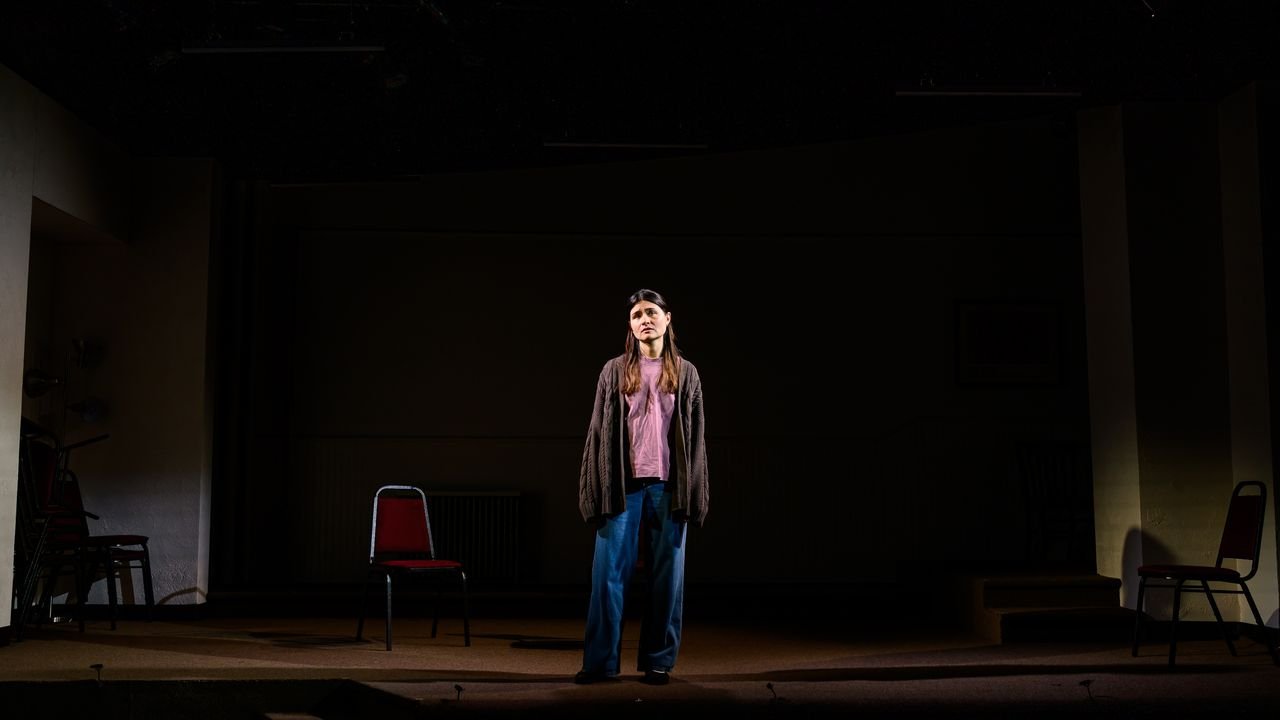
Ireland, who named the woman A, recalls writing in fits and spurts as she explored her own trauma, before sharing small sections with her friends for feedback.
“A lot of it was about hearing what resonated with people in the room, and I think there is such a vulnerable thing as a writer that I’d never experienced, of feeling, Does anybody else understand this at all? Does anybody relate to any of this? It’s so private and so vulnerable and exposing, hearing actors that I really love and respect talk about what resonated with them.”
The play resonated so strongly, in fact, that it sold out its 2024 premiere at the Connolly Theatre. Directed by Maria Dizza—who also helms the new production—the performers then playing A included Tatiana Maslany, Tavi Gevinson, Deirdre O’Connell, Julia Chan, and Dizza herself. Sarah Steele, Greg Keller, and Dael Orlandersmith were in the supporting cast, as they are for the Greenwich House Theater run.
It didn’t hurt Ireland’s creative process that she’s been an active member of the theater community for decades, working on and off Broadway. She received a Tony nomination for her performance in Reasons to Be Pretty in 2009 and starred last year in Martyna Majok’s Queens at New York City Center. Known for the steely strength she brings to her characters, Ireland has also recently appeared in the TV series His & Hers and The Devil In Disguise.
Corey Nickols takes photos of Marin Ireland
Photo: Corey Nickols
Actually staging Pre-Existing Condition was not a priority for Ireland. “I kind of gave up on it 15 times along the way,” she says. “I always thought that even if I did finish it, it felt so presumptuous of me, after working with the writers I worked with over the years… That wasn’t ever part of my fantasy. I didn’t actually have an endgame for it. It was always like, I just think I need to keep writing.”
While Ireland drew upon some personal experiences for the script, much of the play is fiction. She says the response from her friends helped her to see the play as a piece of art, rather than a reflection of herself.
“It would make me feel like, I can think of this as something outside of me, and I can think of this as something that might be useful in the world, as opposed to something like: How does this relate to my own sense of fragility or exposure or anything like that?”
