
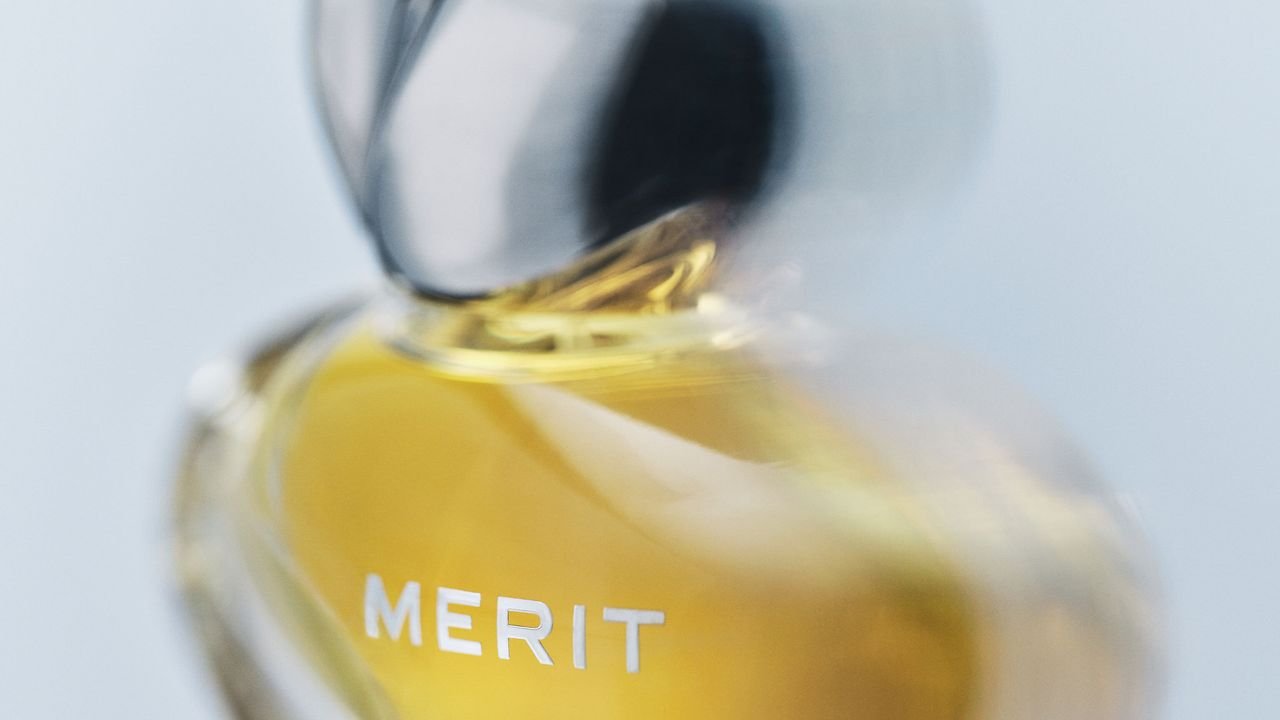
New Wave is no copy of past successes. Instead of repeating familiar formulas, Ropion and McCurtin focused on why certain scent structures, like amber, remain timeless—and how to give them new life. “The fragrance is built around a reinterpretation of Ambre 83, one of perfumery’s great amber structures,” Ropion and McCurtin tell Vogue. “We kept its foundation of benzoin, labdanum, patchouli, vanilla, tonka bean and olibanum, then introduced more brightness, transparency and movement through pink pepper, angelica, a honeyed-golden floral accord and ylang-ylang. Together, these materials create what we call a Neo Gold.”
Described as “unconventionally constructed,” New Wave brings together incense, woods, tobacco, vanilla, tonka, and musks for a layered and intriguing base. Despite its richness, the scent is designed to feel fresh and radiant—a “solar” effect that’s more about sensation than any single note. “In this case, solar is less about a specific ingredient than a sensation. It is a feeling of warmth, radiance, and light on skin,” they continue.
Inspiration came from a mood board sent by CMO Aila Morin, filled with golden hues that sparked the idea of translating emotion into scent. “We don’t try to translate visual elements literally into notes,” Ropion and McCurtin continue. “Instead, we try to understand the emotions and values behind the brand. [The moodboard] expressed optimism, sensuality, and self-assurance. Those qualities became more important than any specific ingredient.” Over two years of refining and reworking, the perfumers deepened New Wave’s complexity, with their collaborative dynamic at the heart of the process. Ropion, an icon in the fragrance world, mentored McCurtin, whose chemistry expertise added something truly special to their partnership.
New Wave l’extrait de parfum’s mood board. Photo: Merit
“Dominique played an important role in shaping my approach to perfumery—he taught me the importance of structure, discipline, and rigor, but also gave me the confidence to trust my own instincts,” said McCourtin. “There’s a natural openness in the creative process. We can challenge each other’s ideas freely because that foundation of trust already exists. What I appreciate most is that the objective is never to impose one vision over another. It’s a collaborative process in which the fragrance gradually becomes something greater than either person’s individual perspective.”
Morin doesn’t believe in narrowing the audience for New Wave. “It could be for the Retrospect woman when she wants to feel a bit more sensual, maybe she’s going out to dinner; or that could be for an entirely new customer who never quite resonated with Retrospect,” she says, noting that signature scents are making a comeback after years of ever-expanding fragrance collections. “If New Wave becomes your signature scent, we’re just as happy with that as we are if it becomes something you reach for when you want to feel a certain way.”
