

Of course, the former is clearly the bigger issue, as every man is named after their work, while the town’s married women are simply The Tailor’s Wife (Elizabeth Debicki), The Innkeeper’s Wife (Emily Lloyd-Saini), The Bottlewasher’s Wife (Marli Siu), etc… Throughout the film, it becomes quite clear that The Tailor’s Wife, in particular, is resentful of more than just Fisherwoman’s unkept appearance and hygiene practices.
But loneliness is a powerful thing, and Fisherwoman eventually finds herself craving intimacy. Unwilling to settle for any of the eligible men in her town, she seeks out the reclusive Basketmaker (Peter Dinklage) to build her a husband.
Peter Dinklage as Basketmaker.
Courtesy Everett Collection
How does the town react?
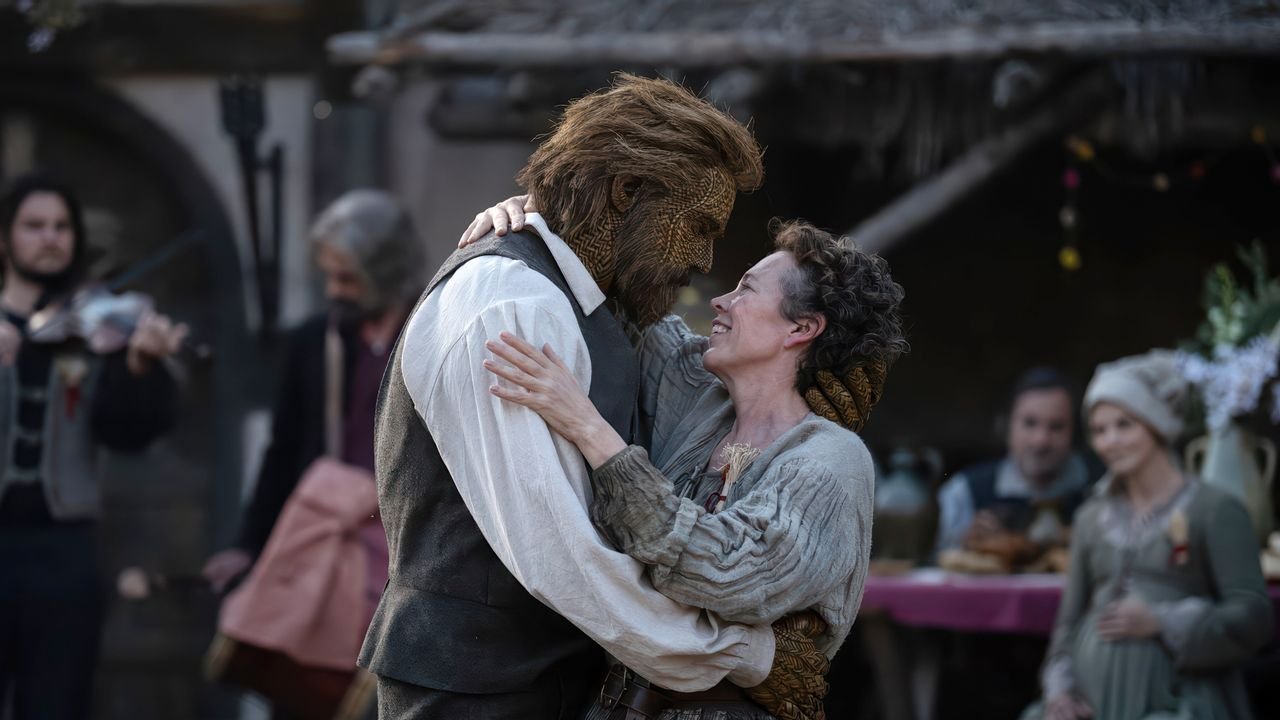
Wicker Husband’s clear devotion towards Fisherwoman sparks envy among dissatisfied wives and anxiety among men who don’t want to live up to a new set of standards. After all, Wicker Husband dances proudly with his wife in front of everyone, satisfies her enough to break their bed, and then fixes said bed without being asked. This newfound insecurity leads The Bottlewasher (Gustav Lindh) to try to impress his wife by fixing their roof, only to fall to his death.
The Tailor’s Wife’s jealousy, however, is less about Wicker Husband and more about Fisherwoman’s continued autonomy. So when she asks for a chance to help her husband expand their business as partners and is rebuffed, her resentment only grows. She sees an opportunity to upend Fisherwoman’s happiness when The Bottlewasher’s widow, who also happens to be her sister, seeks out Basketmaker to weave her a baby.
