

Bit of a shock, isn’t it, Dolly Parton dying. I know she’s been around forever, and been around the block, but I always thought she’d just… carry on? Carry on brimming with vitality in every performance and interview. Carry on with her trademark wit and humility. Carry on being camp and careful and carefree. Here she would come again (and again), looking better than a body has a right to, spending a lot of money to look that cheap.
Dolly was a woman for whom death felt impossible—a bit rude, even. Dolly was permanent, a monarch appointed by the people.
As flags flew at half-mast across America, I gave my one-year-old a quick Dolly education. She was captivated by a smoky live performance of “Here You Come Again,” a song that got me through my first breakup. We did “Jolene” (my sister’s middle name). We did “9 to 5,” which is sort of my least favorite for its crowd-pleaser-ness, yet my most fave for being on the 2manydjs CD I got when I first started going clubbing. (I had to explain 2002 to the baby, and what a bootleg was.) I also explained that Dolly wrote “I Will Always Love You” before Whitney Houston’s vocal Olympics—but then I had to topline the plot of The Bodyguard as “Islands in the Stream” blared and the baby toddled off. I was giving my girl a tour of Dolly, but a tour of Dolly is also a tour of my whole life.
Everybody loved Dolly Parton. My mate Max always says that if you’re famous, you’re either for the girls, for the gays, or for the guys. You can have two, but not all three. Dolly somehow got the full electoral map: straight-man pin-up, gay icon, women’s hero. In a hopelessly polarized world, she bridged the left and right, middle America and the coastal elite. We all had Dolly in common, like Ikea’s Billy bookcase.
But Dolly was universal without being neutral, without the sanded-off edges of modern celebrity. She was a woman of exaggerated looks, deadpan humor, devout Christianity. Her Southern charm communicated something essentially liberal—be kind, mind your business, live and let live—without making kindness feel like a political affiliation.
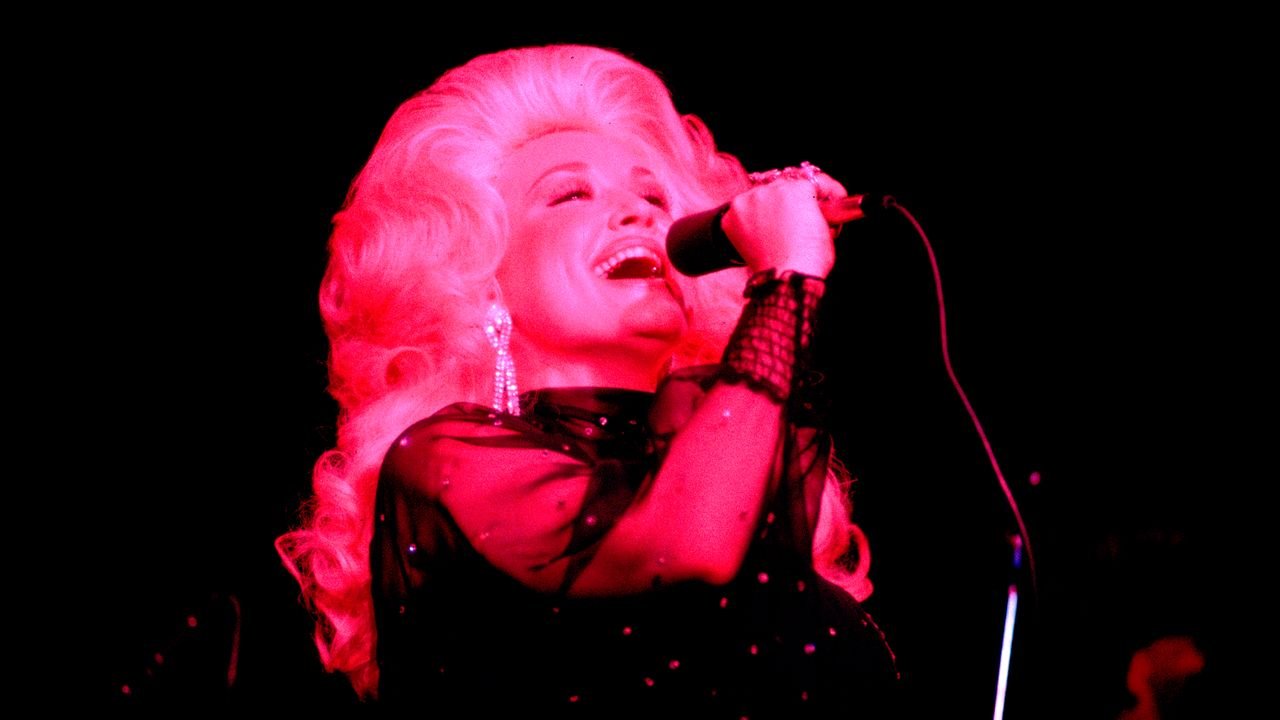
And Parton’s look—enormous boobs, a tiny waist, diving board fingernails, absolutely gargantuan platinum wigs—was integral to her appeal. She lived through a not-distant-enough time when blondness and intelligence were deemed to negatively correlate—when the idea that looking like Dolly meant you had the depth and bandwidth of, well… a doll. Her exaggerated femininity could be read (ungenerously!) as a capitulation to the male gaze, but Dolly didn’t capitulate to anything; she completely refranchised the bimbo. There’s something exceptionally brilliant about looking like you were drawn by the horny pencil of a teenage boy whilst ushering in some of the most haunting and heartfelt lyrics in musical history. Dolly Parton dressed like a punchline but she sang like a proverb.
That was Dolly’s masterstroke. Beneath all the rhinestones was an astonishing songwriter; strip away the glitz and you were left with the marrow of the human condition. My daughter won’t remember the day Dolly Parton died, but she’ll know Dolly. She’ll know the bops and the ballads, the wit and the wisdom, the Jolene of it all. Dolly will be there when she needs a cup of ambition and Dolly will be there when someone takes her man. Dolly Parton doesn’t persist because she might have lived forever; she persists because we’ll keep introducing her to a generation who’ll eventually need her too.
